


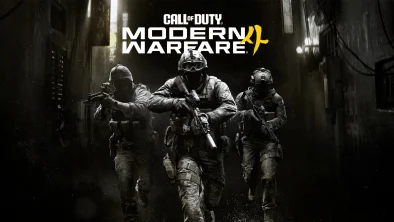
Infinity Ward developers have explained how Call of Duty: Modern Warfare 4 approaches its Korean campaign, experimental Kill Block multiplayer map, large-scale Ground War, and returning DMZ extraction mode. The team discussed the game’s major pillars during an Official Xbox Podcast recorded at Infinity Ward.
Modern Warfare 4 launches October 23, 2026, for Xbox Series X|S, PlayStation 5, PC, and Nintendo Switch 2. The podcast focuses less on editions and launch logistics and more on why the campaign uses two distinct perspectives, how multiplayer is trying to reduce menu friction, and how DMZ aims to preserve extraction-shooter tension without making every failed deployment feel wasted.
The campaign follows Private Park and an outlaw Captain Price
Campaign developers Jack O’Hara and Mark Grigsby said Infinity Ward wanted a setting that felt fresh while remaining recognizable as Modern Warfare. Much of the story takes place on the Korean Peninsula, where Private Park Hyun Jun and his squad experience the conflict from the front lines.
That perspective runs alongside Captain Price’s story. Following the events of Modern Warfare III, Price is on the run and Task Force 141 has been disbanded. The two groups do not simply begin the game fighting together; their separate actions gradually affect each other as the campaign develops.
Infinity Ward also described the research behind its version of Korea, including consultation with Korean staff on language, food, signage, military details, and other cultural elements. The studio wants players to notice that environmental work instead of treating every location as scenery between firefights.
Our earlier look at the Modern Warfare 4 campaign and John Price’s situation explains how the new story follows the rebooted trilogy.
Gunny and Kill Block change the multiplayer routine
Multiplayer developers Jack Hoppus and Jacky Reynolds highlighted Gunny, a tool built into the wider Gunsmith system. Gunny can immediately generate a weapon setup so players can enter a match without searching for a popular build or spending a long time comparing attachments.
The generated setup is intended as a starting point rather than a replacement for customization. Players can test the weapon, keep the suggested build, or swap individual parts after learning what they want to change.
Kill Block takes a similar experimental approach to maps. Infinity Ward created more than 500 modular “slabs” that can combine into different layouts, changing sightlines, flank routes, and cover between matches. The team initially found the idea especially effective for Gunfight, where the weapons and arena can both change, but it also supports modes including Team Deathmatch, Domination, Search and Destroy, and Kill Confirmed.
That structure rewards knowledge of individual map pieces without allowing players to rely on one memorized route every round. A familiar slab might appear in a new combination, forcing both teams to reassess the middle lane and possible flanks.
Ground War rewards teams for holding objectives
Modern Warfare 4’s Ground War variant, Combat Outpost, uses the larger Hajin space for infantry, vehicles, long-range combat, and killstreaks. Holding capture points for longer periods provides escalating team-wide rewards: first a UAV, then a care package, and finally a tank.
The developers described it as a different pace from standard 6v6 multiplayer. Players keep their normal weapons and killstreaks, but the larger battlefield creates room for coordinated vehicle play, sniping, and broader team movement.
DMZ is built as an “action extraction” mode
DMZ developers Joe Cecot and Geoff Smith said the mode is designed to encourage players to take risks instead of avoiding every fight. Progress continues even when a deployment goes badly, while systems for recovering teammates and handling missing operators are intended to soften some of the genre’s harshest edges without removing its stakes.
Hajin is more than a static extraction map. Story Missions and Dynamic Operations provide direction, while weather, AI threats, convoys, other players, and unexpected encounters can alter the plan during a deployment. A Trait Tree and persistent progression give players additional reasons to extract, improve an operator, and return.
For a more focused explanation of those systems, our Modern Warfare 4 DMZ overview covers Hajin, crafting, and operator progression.
Modern Warfare 4 launches October 23
Call of Duty: Modern Warfare 4 releases as a standalone game on October 23. Its campaign, multiplayer, and DMZ are part of the launch package, with Warzone integration scheduled to begin during Season 1.
Players looking for release times, preload details, editions, and the current Game Pass position can use our Modern Warfare 4 Complete FAQ.
Which of Modern Warfare 4’s three main pillars are you starting with: campaign, multiplayer, or DMZ?
Comments
No comments yet. Be the first to share your thoughts.