


Meta Connect 2026 announcements spanned two days, September 23–24, and ranged from a new $1,299.99 pair of VR glasses to camera-free Ray-Ban Meta Audio frames, Ray-Ban Meta (Gen 3), the pocket-sized Muse Charm, hearing-enhancement software, new VR games, game-creation tools, AI models, and a wider developer platform for smart glasses. This guide separates genuinely new hardware from new variants and software updates, with the US prices and release timing Meta has confirmed.
The largest gaming announcement was Meta VR Glasses, a roughly 100-gram device that moves its compute hardware, battery, and storage into a tethered puck. Meta also used Connect to show how creators will build games with Horizon Create and Horizon Studio, while expanding its consumer glasses line and updating the existing Meta Ray-Ban Display.
Meta Connect 2026 announcements at a glance
| Product or announcement | What it is | US price | Availability |
|---|---|---|---|
| Meta VR Glasses | New lightweight VR glasses with a tethered compute puck | $1,299.99 | Spring 2027 |
| Ray-Ban Meta Audio | Meta’s first audio-only AI glasses, without a camera | From $349 | Preorders opened September 23; ships October 13 |
| Ray-Ban Meta (Gen 3) | New generation of camera-equipped Ray-Ban Meta glasses | From $449 | Available now |
| Meta Capri and Meta Nova | Two new Meta Glasses frame styles | Not separately announced | Announced; market-specific timing not detailed |
| Meta Glasses collaborations | Kylie Jenner Ivory colorway and two LISA editions | From $399 | Announced; check regional availability |
| Meta Adventurer | Lower-cost Meta Glasses with a plug-in case | From $249 | Preorder now; on sale October 23 |
| Meta Ray-Ban Display updates | New navigation, Hologram calls, apps, and market expansion for existing hardware | No new price announced | Features roll out on different schedules; European retail expands October 13 |
| Horizon Create and Horizon Studio | Mobile and browser tools that generate and edit complete 2D and 3D games | Not announced | Gradual early access; waitlist open |
| Muse and Meta Model API updates | New reasoning, coding, image, voice, open-weights, and deployment options | Varies by service | Muse Code is out of beta; Meta Model API is generally available |
| Muse Charm | Pocket-sized physical device for talking to Muse through a real-time voice model | Not announced | Still in development; more details promised later in 2026 |
| Hearing Enhancement | FDA-cleared hearing software for supported Meta AI glasses | $149.99 or included with Meta One | US launch later in 2026 |
| AI glasses developer platform | Wearables Device Access Toolkit 1.0, web apps, connectors, and discovery surfaces | Not applicable | Updates begin rolling out September 30 |
Meta VR Glasses are Meta’s biggest new gaming device
Meta VR Glasses are a new product, not a renamed Quest headset or a software update. The device is built as a two-part system: the glasses hold the displays and sensors, while an optical cable connects them to a pocketable compute puck containing the processor, battery, and storage. Moving those heavier components off the face lets the glasses weigh about 100 grams, according to Meta.
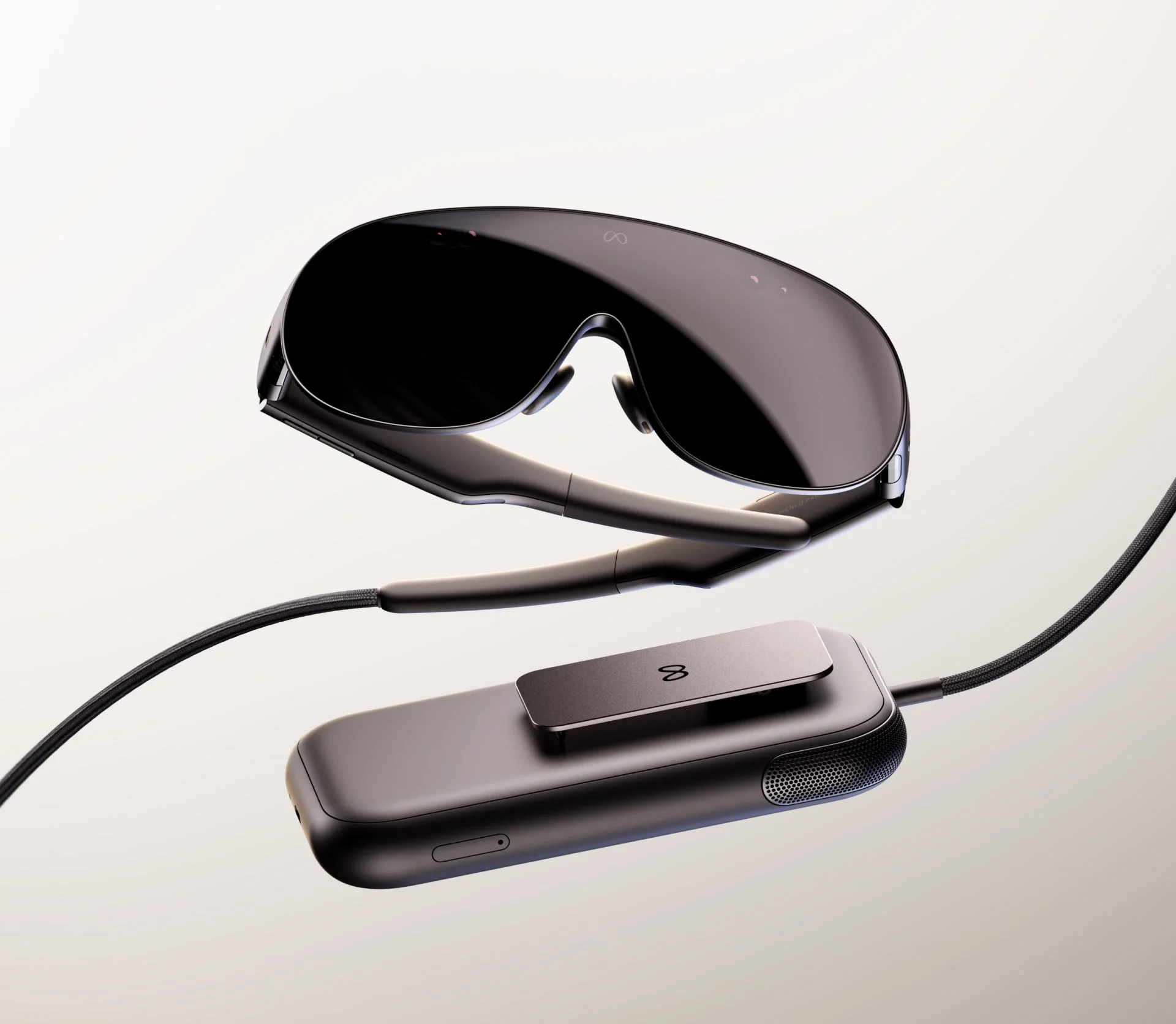
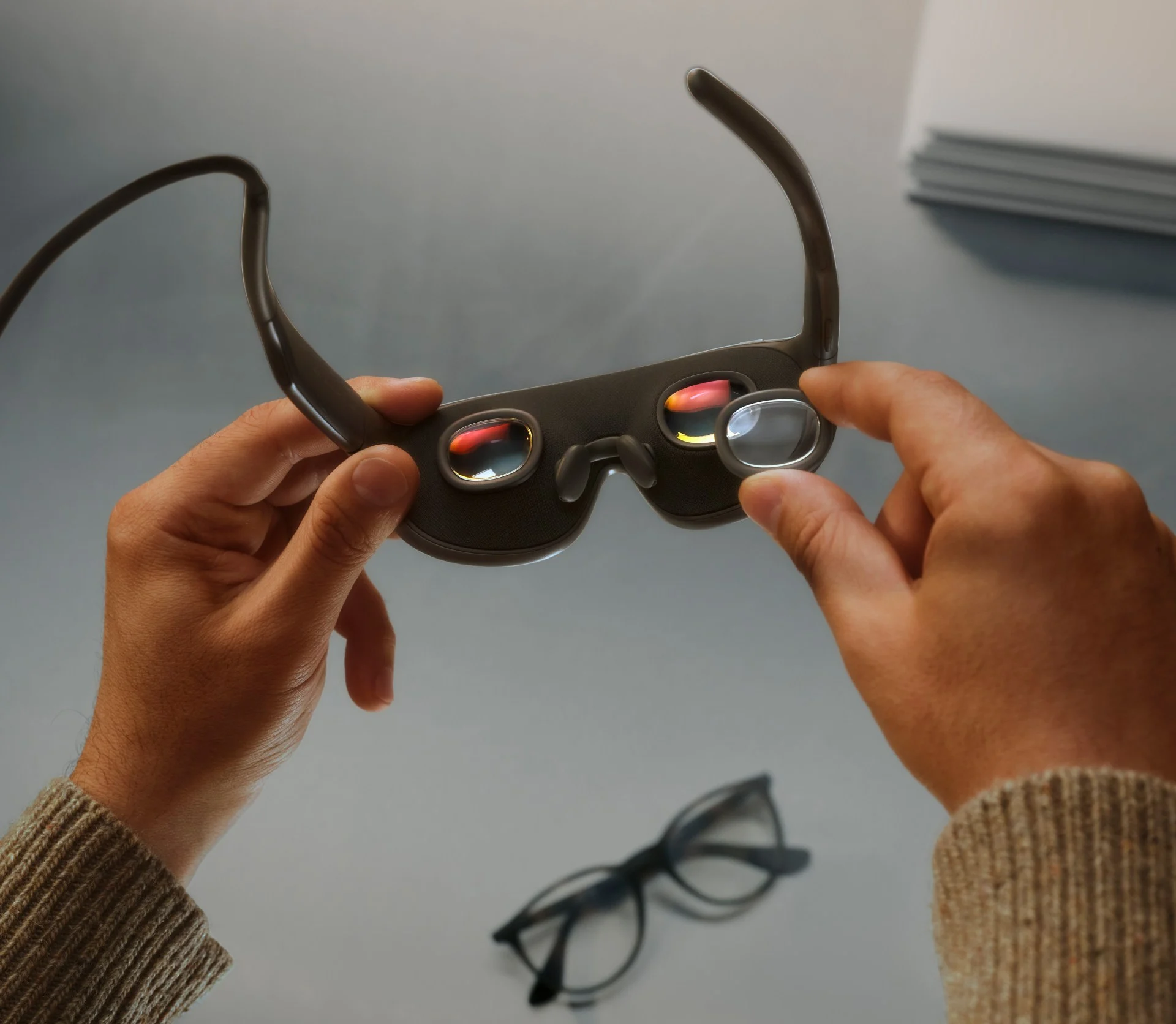
The glasses use a 5K Infinite Display built around micro-OLED panels and custom pancake optics. Meta rates the display at 37 pixels per degree and has integrated Dolby Vision support and Dolby Atmos spatial audio into the frame. Its developer documentation lists a nominal straight-ahead field of view of 70 degrees horizontal by 66 degrees vertical and a physical panel resolution of 2,412 × 2,288 pixels per eye. Meta cautions developers that fit, eye position, and gaze direction can reduce the visible area, so that field-of-view figure is an upper bound rather than a guaranteed edge-to-edge view.
| Meta VR Glasses specification | Official detail |
|---|---|
| Design | Two-part glasses and compute-puck architecture connected by an optical tether |
| Weight | About 100 grams for the glasses |
| Display | 5K Infinite Display with micro-OLED panels |
| Panel resolution | 2,412 × 2,288 pixels per eye |
| Pixel density | 37 pixels per degree |
| Field of view | Nominal 70° horizontal × 66° vertical |
| Optics | Custom ultra-compact pancake lenses |
| Visual and audio formats | Dolby Vision and integrated Dolby Atmos spatial audio |
| Processor | Qualcomm Snapdragon Reality Elite, housed in the puck |
| Puck battery | Up to three hours of continuous high-resolution media playback |
| Charging | 45W fast charging |
| Input | Eye tracking and natural hand tracking; Look and Pinch is the primary controller-free model |
| Passthrough | Full-color passthrough |
| Controllers | Ships without controllers; Meta Quest Touch Plus controllers are supported and sold separately |
| Software ecosystem | Same operating system, Store, payment platform, and SDK family as Meta Quest |
| Price and launch | $1,299.99; Spring 2027 |
Meta has not announced the glasses’ RAM, storage capacity, or refresh rate. Those omissions matter because the puck contains storage and most of the compute hardware, but there is no official capacity breakdown yet.
Eye and hand tracking replace controllers by default
Eye tracking and hand tracking are the primary controls. Meta calls the core interaction model Look and Pinch: the wearer looks at an interface element to target it, then pinches to select it. For standard Android interfaces, Horizon OS can translate that gaze-and-pinch action into familiar touch events. Meta AI is integrated at the operating-system level, allowing voice, eye, and hand input to open apps, search, start media, and rearrange a workspace.
The product ships without controllers, but Meta’s VR developer recap confirms compatibility with separately sold Meta Quest Touch Plus controllers. Controller-heavy titles can therefore work after controllers are paired, while Meta says its Store will prioritize hands-compatible content for VR Glasses owners. The same Horizon OS foundation, Store, payments, and SDKs used by Meta Quest are intended to make existing apps easier to carry over. That gives the device a direct lineage to the Quest platform that GNP covered when the Oculus Quest 2 was officially revealed, even though the new hardware has a very different form factor.
Movies, live sports, work, and Hologram calls
Meta is pitching the glasses as more than a gaming device. They are the first VR product to receive IMAX Enhanced certification, with support for select films presented in IMAX’s expanded aspect ratio. Disney+ subscribers in select countries are due to receive 3D films beginning in November, including Marvel’s The Avengers and Black Panther, alongside themed viewing environments. The separate Disney Immersive Cinema by ILM app will offer “VR Enhanced” presentations such as Avengers: Infinity War and Star Wars: A New Hope.
Meta also named Prime Video, YouTube, DIRECTV, AMC+, Crunchyroll, Plex, ESPN, Tubi, Peacock, HBO Max, Paramount+, Lionsgate, and James Cameron’s Lightstorm Vision among its media partners. Some of this catalog will first serve the broader Meta Quest ecosystem before the glasses arrive; Meta says thousands of titles should be available internationally by the Spring 2027 launch.
For sports, Meta and ESPN are starting an Immersive Sports format on Meta Quest with 8K streaming and 180-degree views, beginning with college football in 2026. After Meta VR Glasses launch, the company expects more than 100 immersive live sporting events per year through partners including MLB, NBC Sports, TNT Sports, and UFC.
Productivity centers on one or more large virtual screens, full-color passthrough, and the ability to turn a flat surface into a keyboard and touchpad. The puck is rated for up to three hours of continuous high-resolution media playback and supports 45W charging, so the announced endurance remains an important limitation for long work sessions.
Hologram calling creates a photorealistic digital representation of the wearer, including inferred real-time expressions and reactions. People in VR see that representation spatially, while participants joining from a phone or computer see it on a conventional screen. Meta says it works with calling apps ranging from WhatsApp to Zoom.
Gaming at launch
Meta says more than 75 games playable entirely with hand gestures will be ready at launch. Xbox Cloud Gaming will add access to hundreds more games, although a controller will still make sense for many conventional titles. Cloud-streaming access is also subject to Microsoft’s service terms; GNP recently covered the monthly hour limits coming to Xbox Cloud Gaming.
The device is therefore an addition to Meta Quest, not a declared replacement. Meta’s v207 SDKs for Unity, Unreal, Android, and the web are already available so developers can adapt input, interface placement, and performance before the hardware ships.
New VR games and Beat Saber Flux
Meta’s detailed official Connect recap also listed seven new games built around hand tracking: Cardmada, Dice Throne Digital, Dragon Grove, Phoenix Wright: Ace Attorney – Dual Destinies, Supernatural, Tetris Effect: Mixed Realities, and Two Point Hospital. Meta says they can be played controller-free on Meta VR Glasses or with controllers on Meta Quest. Individual prices and release dates were not announced in the recap.
Beat Saber will receive what Meta calls its biggest update yet in spring 2027 on both Meta VR Glasses and Meta Quest. The update includes a visual refresh, a new logo, and Flux, a hand-tracking mode in which players use their hands as weapons, channel energy between their palms, and build Jolt Energy for bonus points.
Ray-Ban Meta Audio removes the camera
Ray-Ban Meta Audio is Meta’s first audio-only pair of AI glasses. It has no camera, separating it from camera-equipped Ray-Ban Meta products and making audio, calls, podcasts, music, and hands-free access to Meta AI the focus. Meta says the frames weigh about 43 grams.
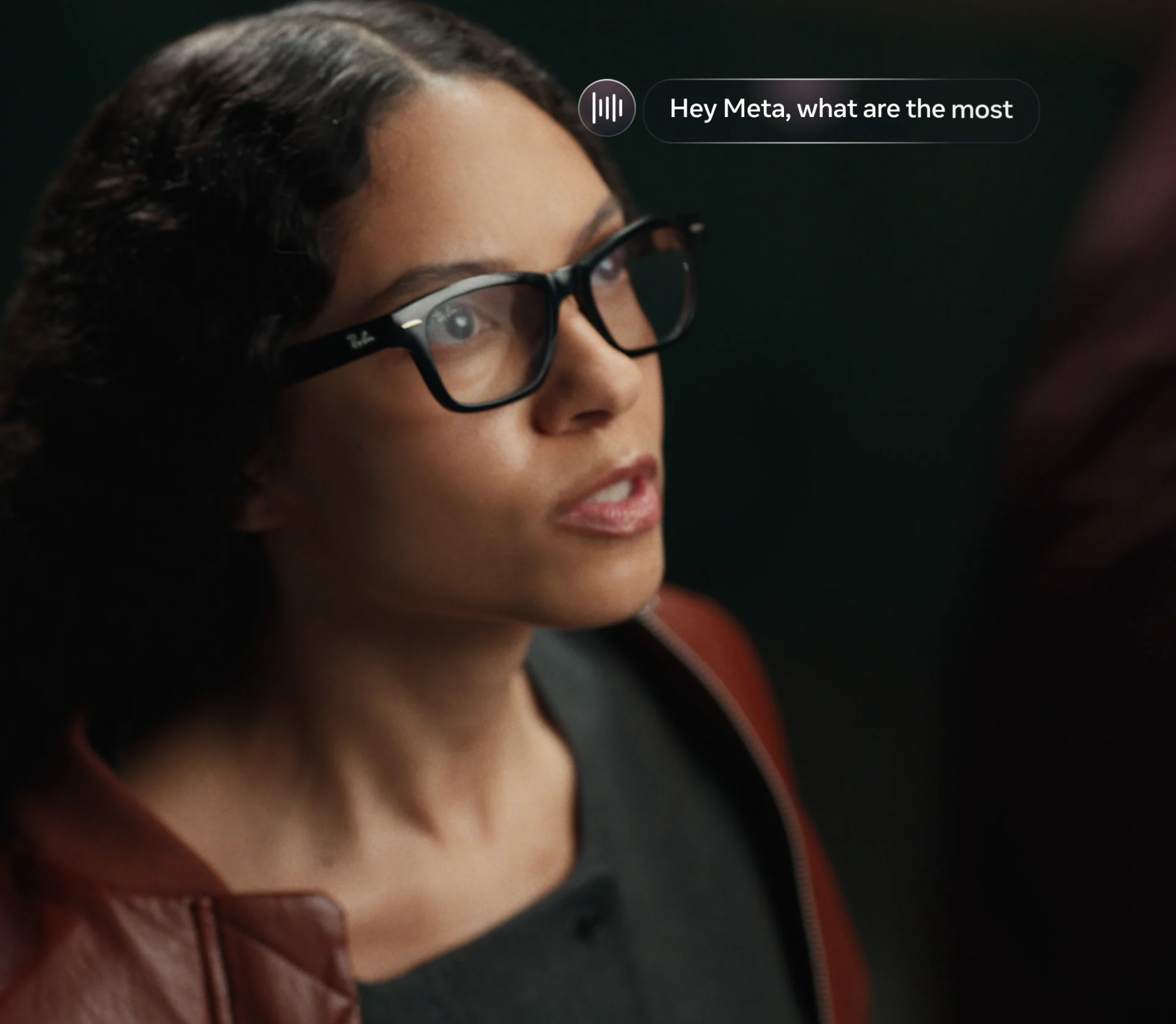
Open-ear speakers keep environmental sound audible while the glasses handle listening and calls. The launch announcement claims up to 12 hours of use per charge and up to 48 additional hours from the charging case. Professional-adjustable temple tips, overextension hinges, and adjustable or interchangeable nose pads are intended to improve all-day fit.
The lineup covers Clubmaster and Burbank styles in 23 frame-and-lens combinations, with options compatible with a range of prescriptions. US preorders opened September 23 at a starting price of $349, and shipping begins October 13.
Ray-Ban Meta (Gen 3) adds a slimmer design and 3K video
Ray-Ban Meta (Gen 3) is a new hardware generation rather than another color refresh. It is slimmer and designed to be more comfortable, with professional-adjustable temple tips and a configurable action button that can open Meta AI or another preferred function.
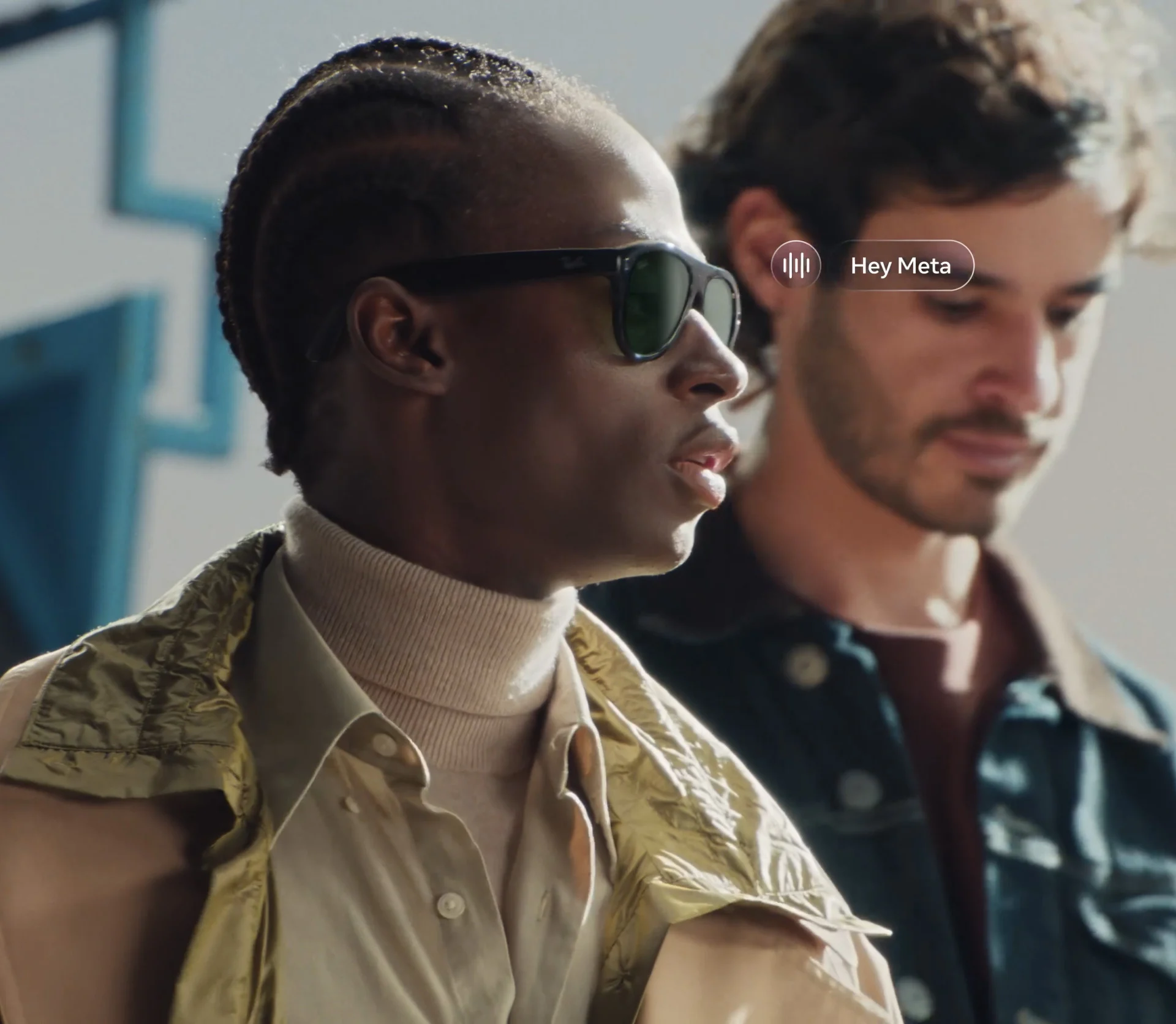
Wayfarer, Aviator, and the new cat-eye Zena shape make up 27 color-and-lens combinations. Meta is also marking the Aviator’s 90th anniversary with a limited-edition vintage-inspired colorway. Prescription configurations are available.
Battery life rises to nine hours, one hour longer than Gen 2. The new six-microphone array is claimed to cut more than 90% of background noise for calls and voice commands. The 12-megapixel camera records 3K Ultra HD video and supports dynamic photos that let the user choose a preferred frame. A capture-indicator LED remains built into the glasses to signal when photos or video are being recorded.
Later in 2026, Meta says its AI glasses will be able to record video with Dolby Atmos and 360-degree spatial sound. Ray-Ban Meta (Gen 3) starts at $449 and became available on the day of the announcement.
Ray-Ban Meta Audio vs. Ray-Ban Meta (Gen 3)
| Feature | Ray-Ban Meta Audio | Ray-Ban Meta (Gen 3) |
|---|---|---|
| Positioning | Audio-only AI glasses | Camera-equipped AI glasses |
| Camera | None | 12 MP; 3K Ultra HD video |
| Styles | Clubmaster, Burbank | Wayfarer, Aviator, Zena |
| Color/lens combinations | 23 | 27 |
| Battery | Up to 12 hours; up to 48 more from case | Up to nine hours |
| Microphones | Six-microphone array | Six-microphone array with claimed 90%+ background-noise reduction |
| Prescription support | Yes | Yes |
| Starting price | $349 | $449 |
| US availability | Ships October 13 | Available now |
Meta expands its wider glasses lineup
Beyond the two Ray-Ban launches, Meta announced the Capri and Nova frame shapes for the Meta Glasses family. These are new styles within the existing product line; Meta did not publish separate US prices or a specific release date for each frame in its Connect announcement.
The Meta Glasses by Kylie Jenner range gets an Ivory version of the Starfire style starting at $399. A separate LISA collaboration includes Meta Adventurer LISA Edition in Moonlit Sky with Blush lenses and Meta Capri LISA Edition in an Eclipse cat-eye frame with gray lenses. Both support prescriptions and start at $399.

The limited-edition Meta Fury combines a clear frame with mirrored lenses and is initially exclusive to Connect and Meta Lab stores. The lower-cost Meta Adventurer uses a black frame, gray lenses, and a plug-in case; it starts at $249, is available to preorder, and goes on sale October 23 wherever Meta Glasses are sold.
Mix & Match customization now lets buyers choose a frame, lens, and case color online or at Meta Lab stores. Meta Glasses expanded immediately to Singapore, South Korea, Mexico, and the United Arab Emirates, with Brazil coming later. Oakley Meta, Ray-Ban Meta, and Ray-Ban Meta Optics are also due in Turkey, Poland, Portugal, Israel, South Africa, Indonesia, Thailand, Hong Kong, New Zealand, Malaysia, and the Philippines later in 2026.
Ray-Ban Meta (Gen 2) Optics received three color updates rather than new hardware: limited seasonal Shiny Brick Brown and Shiny Transparent Ocean Blue options for Blayzer Optics, plus Transparent Dark Olive, which Meta describes as a permanent color arriving on Scriber Optics for a limited period.
Hearing Enhancement and new AI glasses software
Hearing Enhancement is separate from the Ray-Ban Meta Audio hardware described above. It is FDA-cleared software intended to help adults with perceived mild-to-moderate hearing loss, and Meta says it can be set up at home in minutes without a clinic visit or prescription. The feature is coming to supported AI glasses in the US later in 2026 for $149.99, with HSA/FSA eligibility, or through a Meta One subscription. Meta has not yet named every compatible model.
All AI-glasses wearers are also due to receive audio-balance controls for shifting sound toward the left or right ear and a mono-audio option that routes all sound to one side. These accessibility controls are software additions across the glasses line, not features exclusive to the camera-free Ray-Ban Meta Audio.
Meta’s wider software roadmap for the coming months includes hands-free coaching for running and cycling, nutrition tracking with personalized insights, and shopping AI that can identify products, surface prices and reviews, set alerts, and help complete purchases by voice. Personalized audio, customizable gestures, and improved visual AI are also on the roadmap, although Meta did not assign a model-by-model release date to each feature.
Meta Ray-Ban Display gets major updates, not new hardware
Meta Ray-Ban Display already existed before Connect 2026. The news is a package of software features, online ordering, and expansion into five additional countries—not a new generation of the glasses.
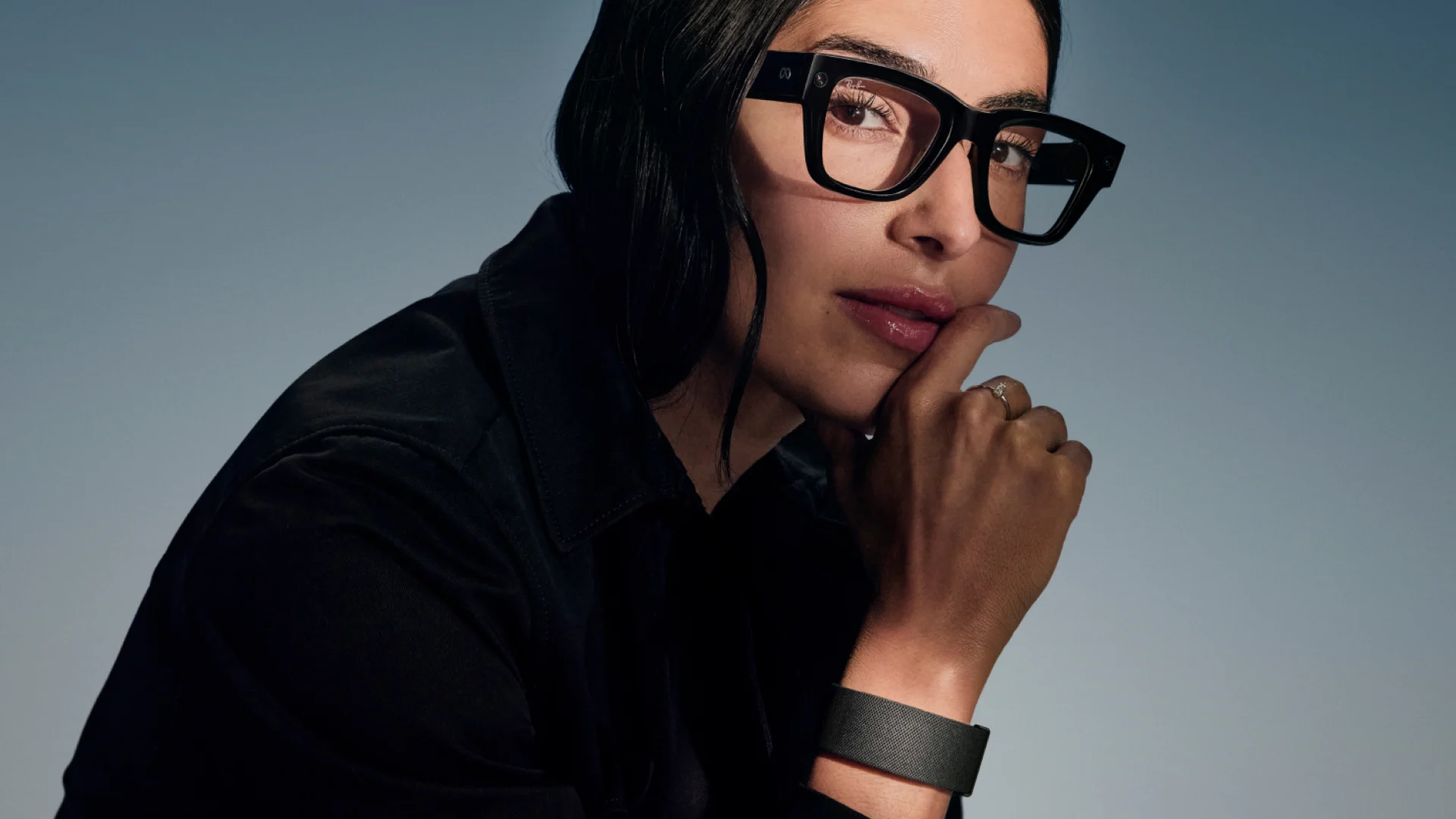
Navigation updates add turn-by-turn cycling directions and real-time public-transit departures, beginning later in September in the US and Canada. Walking directions will use visible landmarks, such as identifying a house where the wearer should turn, instead of relying only on street names.
Hologram for Meta Ray-Ban Display works differently from the VR version. After a short self-capture in the Meta AI app, the glasses create a personalized photorealistic face model for hands-free video calls. The model uses voice to infer expressions. WhatsApp Early Access begins rolling out to US users later this fall.
Explore is a new on-glasses app for finding experiences, with related discovery also coming to the Meta AI app. Additional updates include Dolby Atmos video capture, richer calendar controls for viewing attendees, responding to invitations and joining meetings, mirrored phone notifications, and curated Threads Community Feeds.
US online ordering opened on September 23. Sales also began that day in Canada and the UK, including retail in Vancouver, Toronto, and London. France, Italy, and Germany opened progressive preorders ahead of online and retail availability on October 13 in Paris, Milan, Rome, Frankfurt, Hamburg, and Munich. Prescription availability begins October 13 through EssilorLuxottica optical stores in France and Italy, followed by Germany later in the year.
Horizon Create turns a prompt into a complete game on mobile
Horizon Create is a new standalone mobile creation app built on the Meta Horizon Engine. A creator can describe an idea in natural language or begin with a template, then have the system generate a complete 2D or 3D game with environments, characters, gameplay systems, progression, difficulty, art direction, story elements, and multiplayer support.
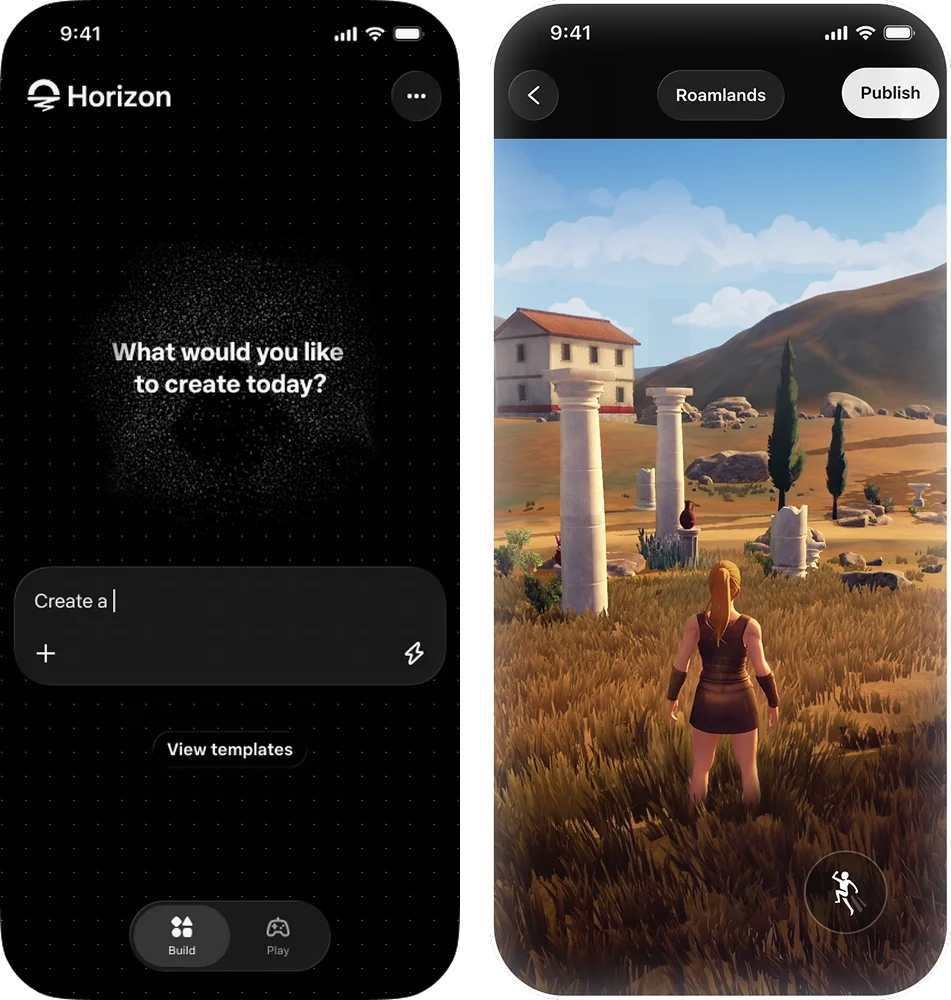
The workflow is built around iteration: start a build, continue playing something else while it generates, receive a notification when the result is ready, playtest it, and describe the next changes. Multiple projects can run at once. Meta says no traditional game engine or coding knowledge is required.
That accessibility claim does not mean every generated project will automatically be good or successful. Meta says published games will be ranked for discovery according to factors such as engagement, stability, cultural relevance, and player retention. Early access is rolling out gradually, and a waitlist is open.
Horizon Studio provides deeper browser-based control
Horizon Studio uses the same natural-language creation system in a browser, with no installation or gaming PC required. It adds visual editing, direct scene arrangement, individual asset replacement, script-parameter controls, sliders, dropdowns, typed values, and hands-on spatial layout editing.
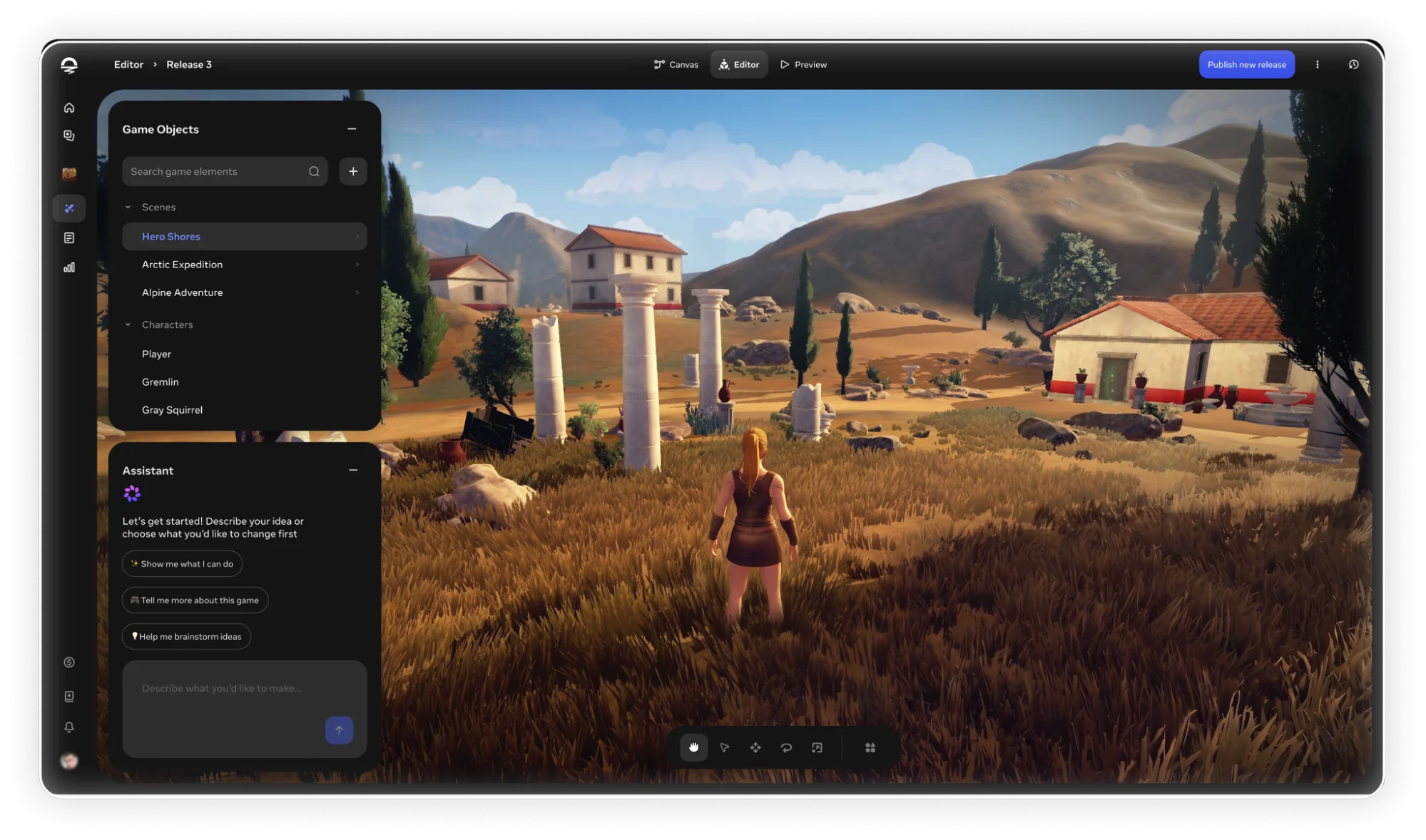
Projects move in either direction between Horizon Create and Horizon Studio. Assets, systems, and iteration history travel with the project, so a creator can sketch a game on a phone and refine it in the browser without restarting.
Games published from either tool become eligible for native distribution across Facebook, Instagram, and Horizon. Meta’s example is an Instagram user tapping a game clip and entering a multiplayer session without a separate app download. The company says in-game monetization and the Meta Horizon Creator Fund will create revenue opportunities, but detailed monetization terms are still to come. Both tools remain in testing and early access rather than general release.
Muse Charm turns Meta’s agent into a pocket device
Meta also used Connect to preview Muse Charm, a physical device built specifically for talking to and interacting with Muse. During the official opening keynote, Mark Zuckerberg described the concept as a small device he could carry on a keychain. Meta’s recap says it fits in a pocket and brings its state-of-the-art real-time voice model into dedicated hardware, creating a direct voice route to Muse without starting in an app. The Muse app, WhatsApp, the web, and the Mac desktop app remain other access points.
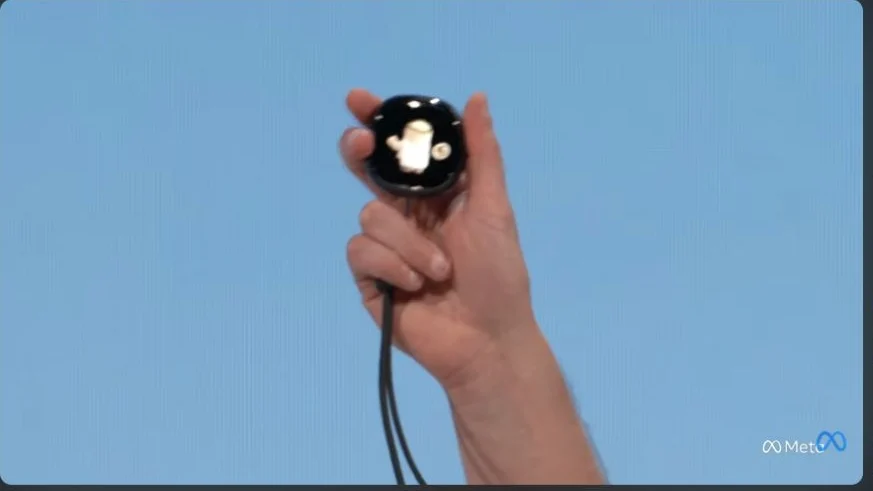
Charm is still a development preview rather than a finished retail launch. Meta has promised more information later in 2026 but has not announced a price, sale date, battery life, chipset, storage, display specification, dimensions, hardware controls, or sensor configuration.
Muse adds real-time avatars, email, Mac control, and more connectors
Connect also expanded the consumer side of Muse. Voice mode supports longer conversations while the agent continues working in the background, and users will be able to describe how they want a voice to sound, including a faster or slower delivery or a particular accent. Meta Superintelligence Labs also showed Muse Realtime Avatar, which turns Muse Realtime Voice into expressive, interactive avatars.
Muse is coming to Meta AI glasses in the next few months with hands-free activation through the agent’s name and the ability to act on what the wearer is looking at. Meta also says each Muse will receive its own email address. Computer use is now available in Muse for Mac: with permission, Muse can control Mac apps and continue working on assigned tasks after the user steps away.
Meta says Muse launched with dozens of partners and access to Shopify’s catalog. The newly named shopping partners are Walmart, Best Buy, American Eagle Outfitters, DICK’S Sporting Goods, Fanatics, Gap, Michael Kors, Sephora, Ulta, and Wayfair, with Shop Pay and PayPal for payments. Expedia is coming soon for travel planning, Instacart covers grocery shopping, and the work-focused connectors include Notion, Granola, GitHub, and Box.
Muse developer models and Meta Model API announcements
Day two shifted toward developers. The official end-to-end recap introduced Muse Spark 1.3 for complex reasoning, coding, and agentic workflows. Muse Code has left beta, is available on Windows, and uses multiple agents by default so parallel workers can write and test code in isolated workspaces during long-running engineering tasks.
Muse Image targets production image generation, while Muse Voice Transcribe expands the voice-to-text side of Meta’s API suite. Muse Glimmer is a 30-billion-parameter open-weights model aimed at local control and on-device agents; Meta says it can run on a single GPU or a Mac Mini. The Muse Connector Platform gives developers a path to connect products to tasks people ask Muse to complete.
Meta Model API is now generally available worldwide. Muse Spark 1.3 is available through Oracle Cloud AI Platform, while Google Cloud availability is in private preview. Those cloud labels are important: general availability for Meta’s own API does not make every partner deployment generally available.
AI glasses gain a broader developer platform
The Wearables Device Access Toolkit 1.0 is now a stable release after a year in developer preview. It extends an existing mobile app to both display and displayless Meta AI glasses while keeping the app’s codebase, backend, and store listing. Supported inputs include camera capture, streamed voice commands, motion tracking, “Hey Meta” invocation, and Meta Neural Band swipes where the hardware supports them.
Developers can also build web apps for Meta Ray-Ban Display with standard web technologies rather than a native SDK. Those apps can use device position, location, wrist motion, dictation, handwriting, and an on-screen keyboard. WebMCP remains in developer preview and lets developers expose selected app functions for Meta AI to call.
Meta AI Connectors provide a third route, linking a service to Meta AI through an API or MCP server so it can be used in the assistant across glasses, web, and mobile. The AI glasses developer recap says the new developer updates begin rolling out September 30. Curated discovery surfaces are also coming to Meta Ray-Ban Display and the Meta AI app, although Meta has not yet published full submission timing for those storefront-like placements.
Which Meta Connect 2026 announcement would you most like to try: Meta VR Glasses, Muse Charm, the new AI-glasses features, or Horizon Create?
Comments
No comments yet. Be the first to share your thoughts.