


Give Us A Sign is a co-op paranormal investigation horror game that turns the players’ own voices and behavior into part of the danger. In this exclusive Game News Plus interview, we spoke with Bahtiyar Ardin from Demir Games about how the studio is working to establish the game’s identity within the genre.
Our conversation covers Dynamic Voice Recognition, the Dynamic Horror Event System, player-specific psychological scares in four-player multiplayer, paranormal entity behavior, Possession, Ghost Dragging, and the Safe House’s role in progression. Ardin also discusses the technical challenges behind Unreal Engine 5 features such as Lumen and Nanite, multiplayer synchronization, performance, and optimization.
Like other games in the co-op paranormal investigation genre, Give Us A Sign will naturally draw comparisons to Phasmophobia. But as Ardin explains in our interview, Demir Games wants to build its own identity around voice, atmosphere, uncertainty, and the way players react under pressure.
Give Us A Sign Interview With Bahtiyar Ardin
GNP:
At first glance, Give Us A Sign is considered part of the same genre as paranormal investigation games such as Phasmophobia. Do you think this comparison is inevitable, and what is the main feature you want to distinguish Give Us A Sign from other games in the genre?
Bahtiyar Ardin:
We actually consider this kind of comparison natural. Give Us A Sign is also part of the paranormal investigation and co-op horror genre, offering an experience in which players enter a location as a team and collect evidence. Therefore, comparisons based on the genre are inevitable.
However, what matters to us is building our own identity on top of this genre. The key difference in Give Us A Sign is that the player does not use the microphone merely as a communication tool. Their voice is also one of the survival mechanics.
Players talk, make sounds, and panic, and all of these become part of the investigation. Entities can react to the players’ volume levels, certain words they use, and characteristics of their voices. At the same time, the environment has been designed as an active element that responds to the player’s presence.
Our goal is to make the player feel, “I am not simply controlling a character in this game. I am actually inside this environment.” For this reason, we want Give Us A Sign to create fear not only through jump scares, but also through sound, atmosphere, uncertainty, and the player’s own behavior.
GNP:
One of the game’s most striking features is that what players say through their microphones can affect paranormal events. How far will the Dynamic Voice Recognition system go in practice? Will ghosts react only to specific words, or will the context of conversations, communication between players, and different languages also be able to affect the experience?
Bahtiyar Ardin:
For us, Dynamic Voice Recognition is a much broader system than simply having a ghost attack when a certain word is spoken. Microphone input is being designed as an active element that creates risk within the player’s environment.
Different variables, such as volume level, certain keywords, and characteristics of the voice, can be evaluated by the system. Because of this, the way players communicate also becomes part of the investigation. Sometimes speaking may be necessary to share information, while that same conversation may also draw the attention of the entity in your location.
As for different languages, a multilingual structure is important to us because voice input forms the foundation of the system. However, we do not want to promise details that are not yet certain regarding the level of support we will offer for each language in the future. Particularly in a game that operates through voice, language support needs to be approached not merely as text translation, but in a way that is fully compatible with the entire system.
Our main goal is not to make the player think, “I should not say this word,” but rather, “Should I be speaking right now?”
GNP:
With the Dynamic Horror Event System, you aim to ensure that two investigations on the same map are not identical. How do you balance randomness with designed horror in a system that considers variables such as the player’s location, the investigation’s progress, and paranormal activity?
Bahtiyar Ardin:
The most important point here is that we do not want to create a completely random horror system. If you leave everything to chance, the result may be events that feel meaningless rather than frightening.
The purpose of the Dynamic Horror Event System is to combine designed horror moments with dynamic conditions. Variables such as where the player is, what stage the investigation has reached, the level of paranormal activity, and what the players are doing at that moment can affect how events occur.
In other words, we do not want the same event to be experienced in the same way by every player, during every investigation, and at every location. But we also do not want it to be completely uncontrolled.
Our approach is not “randomness for randomness’ sake.” Randomness is used to create situations that players cannot predict in advance, while the events themselves operate within specific design rules.
This prevents players from completely memorizing the system over time. A corridor they considered safe during one investigation may become the starting point of an entirely different experience during the next one.
GNP:
You have explained that some paranormal events during multiplayer may be visible only to a specific player. Is having one player see or experience an event that the rest of the team cannot witness a deliberate horror mechanic intended to create suspicion and distrust among players?
Bahtiyar Ardin:
Absolutely. It is based on the idea of creating moments when players cannot completely trust one another.
In co-op horror games, your teammates generally feel like your safe space. When something happens, you expect the other players to see it as well. We want to break that sense of security from time to time.
When one player says they saw something and the other three players saw nothing, it can raise questions such as, “Was it really there?”, “Did we miss something?”, or “Is something happening to us?”
For us, this is not merely a visual effect, but a social horror mechanic. Fear can arise not only from what the game shows you, but also from what your teammate describes and you cannot see.
We believe moments like these can be especially powerful in a four-player co-op structure. When the other players cannot confirm one player’s experience, it can directly affect communication and decision-making within the team.
GNP:
Systems such as Possession and Ghost Dragging directly interfere with the player. With mechanics such as briefly losing control of a player or being dragged by an entity, is the goal simply to create fear, or are you planning a deeper gameplay layer that will change the team’s decisions and the course of the investigation?
Bahtiyar Ardin:
We do not see these systems merely as “animations designed to frighten the player.”
We want events such as Possession or Ghost Dragging to affect the decisions the player makes during an investigation. Something that happens to one player should be able to change not only that player’s experience, but also the situation of the entire team.
For example, if one player loses control while the team is trying to collect evidence, the other players may have to decide whether to try to rescue them, continue the investigation, or leave the area.
It is important that fear and gameplay are not separated here. Rather than telling the player, “A frightening scene is starting now,” we want the paranormal event taking place to change the players’ decisions.
We are not revealing all the details of these systems yet. We want players to discover some mechanics for the first time inside the game.
GNP:
You previously announced that you are planning approximately 20 different paranormal entities and that eight of them will appear in the Steam Next Fest demo. To make one entity feel genuinely different from another, will only their evidence types, strengths, and weaknesses change, or will each entity also have its own distinctive behaviors and investigation methods that can mislead the player?
Bahtiyar Ardin:
For us, distinguishing one entity from another is not limited to changing the evidence list.
Each entity needs to have its own character, behavior, strengths and weaknesses, and paranormal characteristics. When a player encounters an entity, we want them to think not only, “Which evidence is missing?”, but also, “How does this entity behave?”
If we want to create the feeling of a real investigation, the player also needs to draw information from behavior.
This is also why it is important for entities to be able to mislead the player. We do not want players to complete the investigation by saying, “This is definitely X,” after the first few events they encounter. Some behaviors may lead the player to the wrong conclusion, forcing the team to observe more carefully.
This approach aims to turn entities from enemies with different statistics into paranormal cases that each require their own investigation method.
GNP:
You are designing the Safe House not merely as a lobby where players enter missions, but as a more comprehensive hub containing arcade machines, NPCs, preparation areas, and a museum where achievements are displayed. Will the Safe House eventually have a larger function connected to progression or the game’s story?
Bahtiyar Ardin:
Yes. For us, the Safe House is not a simple lobby.
We are designing it as a hub where players return between investigations, prepare their equipment, interact with NPCs, and connect with the game’s world. Characters such as Gianna support the equipment and preparation side of the Safe House, while characters such as Oscar support its exploration and mission functions.
In addition, we want the Safe House to take on a more meaningful role in progression and the story. It is important to us that players feel a sense of progress over time not only in terms of equipment, but also in how they come to understand the world.
For this reason, the museum, the display of achievements, interactive areas, and other details are not merely decorative elements. We aim to make the Safe House a living hub that carries the traces of the investigations conducted by the player over time.
However, we do not want to reveal all the details of the story and progression system at this stage. We prefer players to learn about the game’s world by exploring it.
GNP:
With Give Us A Sign, you are aiming for a high level of visual realism by harnessing the power of Unreal Engine. However, in co-op horror games, performance and stability across different hardware are just as important as visual quality. What has been the most challenging technical issue when balancing your visual goals with four-player multiplayer performance?
Bahtiyar Ardin:
One of the greatest challenges is maintaining high visual quality not only in a static scene containing a single player, but also in a constantly changing and responsive environment with four players.
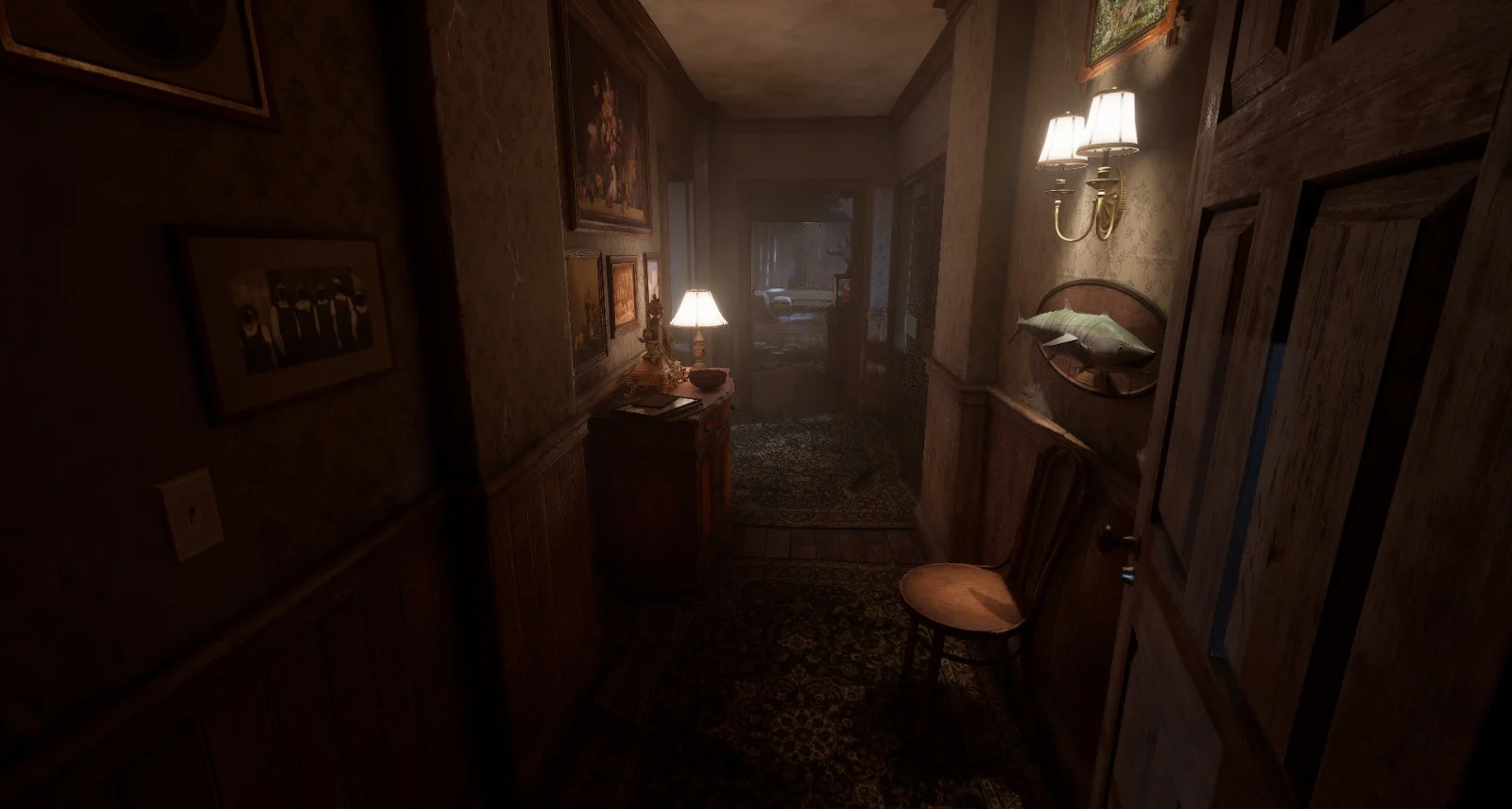
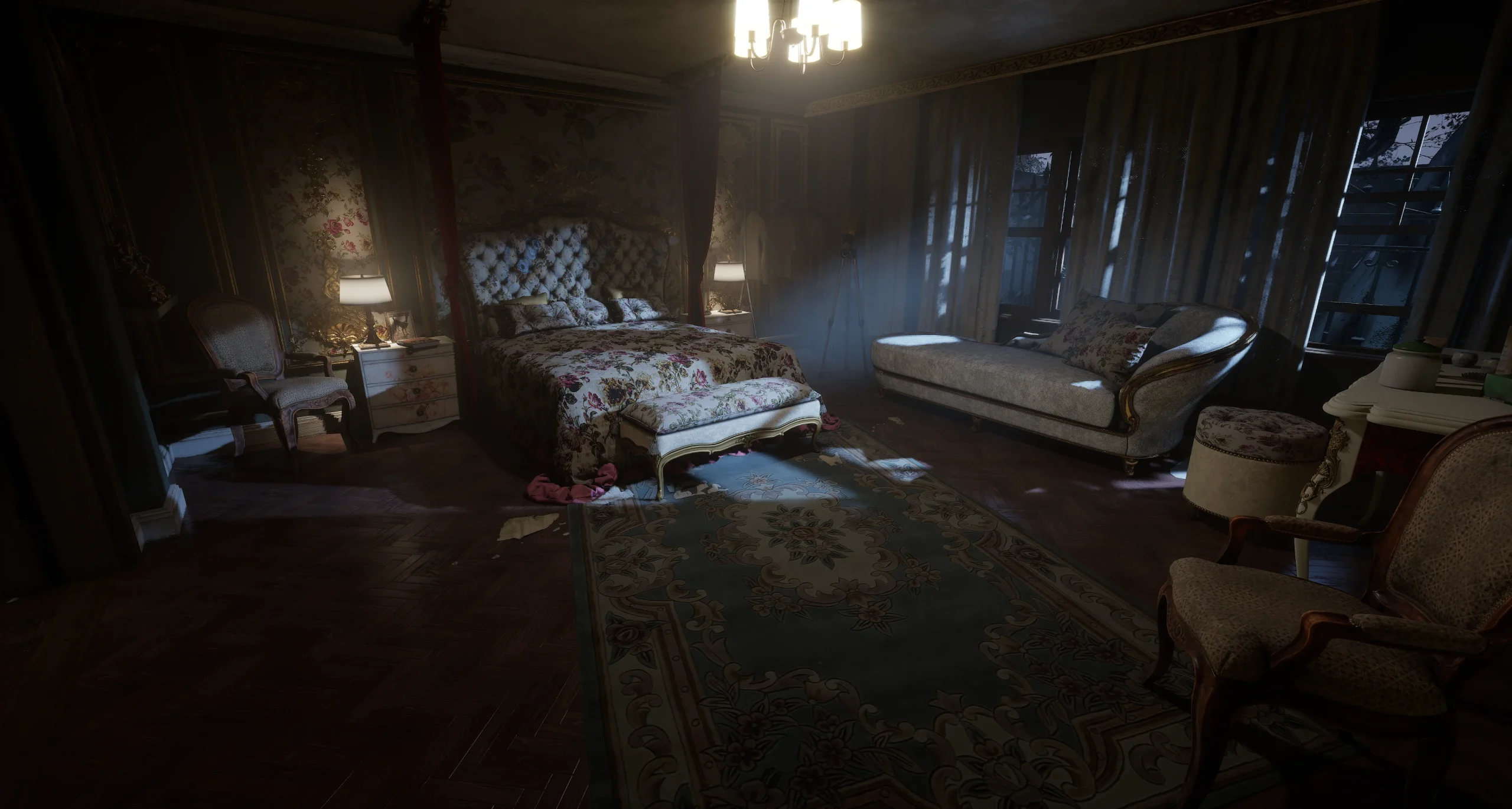
In Give Us A Sign, we do not want the environment simply to look beautiful. The environment needs to react to the player’s voice, movements, and paranormal activity. On top of this, there are large and detailed maps, advanced lighting, 3D audio, multiplayer synchronization, and dynamic horror systems.
UE5 provides us with very powerful tools on the visual side. We can create photorealistic environments with technologies such as Lumen and Nanite. However, when you use all these systems simultaneously, optimization becomes much more important.
Therefore, our goal is not simply to make a game that is “as realistic as possible.” It is to make a game that looks realistic, preserves its atmosphere, and also runs smoothly.
Keeping the performance impact of dynamic systems under control and ensuring the stable operation of a structure in which four players can experience different events simultaneously has been one of the most important technical challenges during development.
About Give Us A Sign
Want to keep an eye on Give Us A Sign? You can follow the game on Steam and check out its official PlayStation Store and Xbox pages for the latest platform and release information.


Comments
No comments yet. Be the first to share your thoughts.